
What Causes Mould in Terrariums?
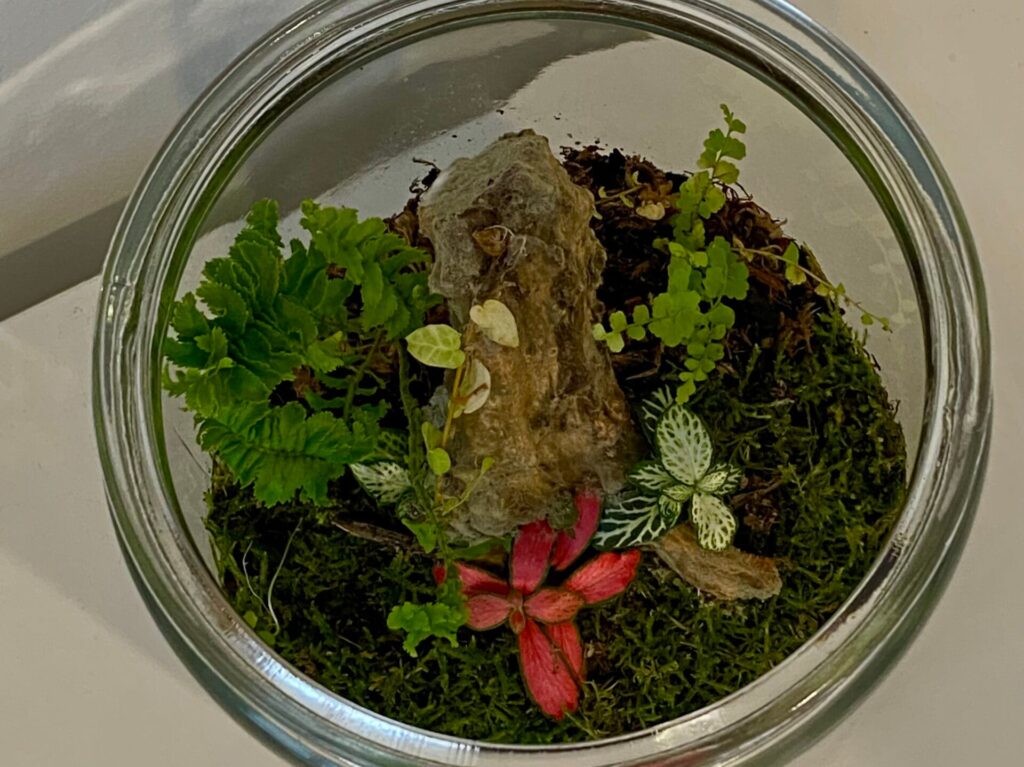
Mould is common in closed terrariums, especially in the first few weeks. It thrives in warm, moist environments – exactly what your terrarium offers. Mould often appears on decaying leaves, wood, or soil surfaces.
Is Mould a Problem?
- In small amounts, mould is normal and part of a natural ecosystem, especially in new terrariums
- Excess mould can look unsightly or overwhelm delicate plants.
- Fuzzy white or grey patches on wood or soil are typical.
How to Manage Mould
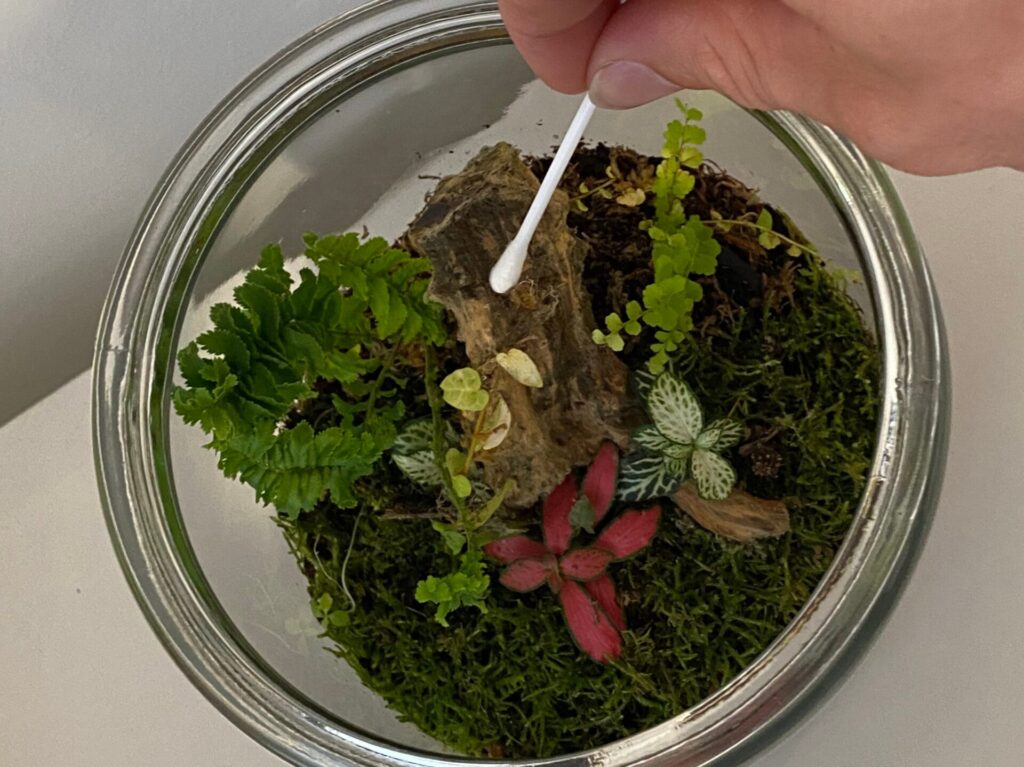
- Remove any dead or decaying material using tweezers. Gently remove mould using a cotton bud. Avoid breathing spores directly and wash your hands after handling.
- Improve airflow by briefly opening the lid if condensation is excessive. Repeat this a couple of times per week until the issue resolves.
- Avoid overwatering – damp conditions fuel mould. Most enclosed terrariums only require watering every few months, if at all.
Springtails to the Rescue
Springtails are your best defence. These tiny soil-dwelling arthropods eat mould and organic waste, helping to prevent mould outbreaks naturally. In a closed terrarium, they will self-regulate and keep the ecosystem balanced.
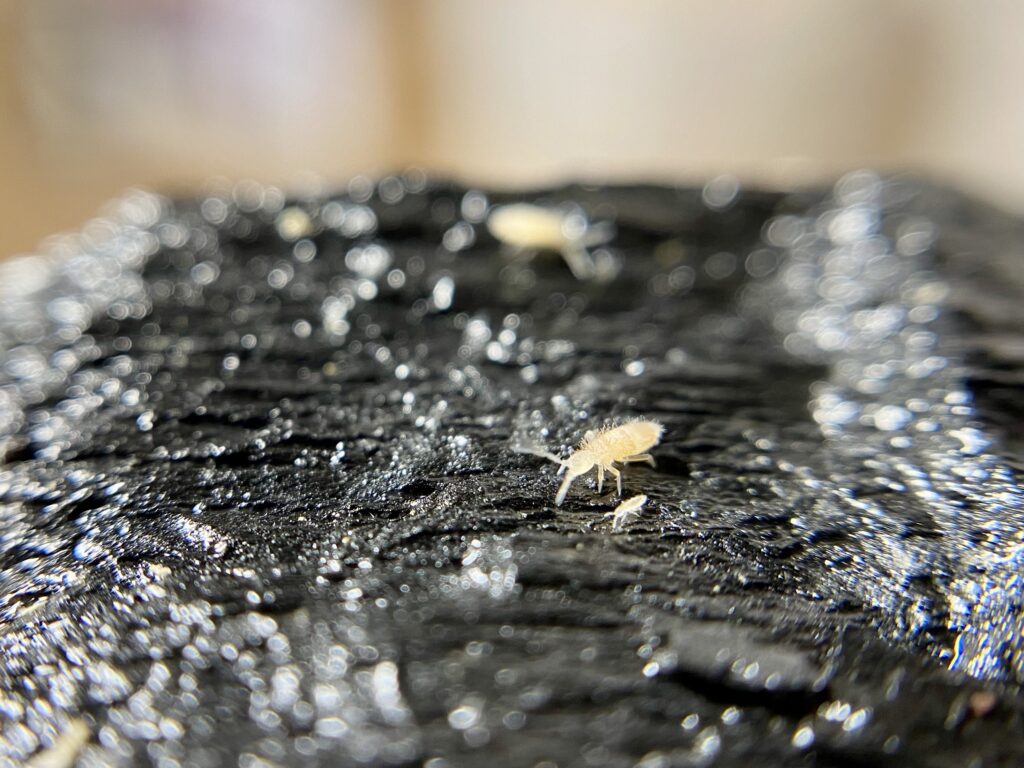
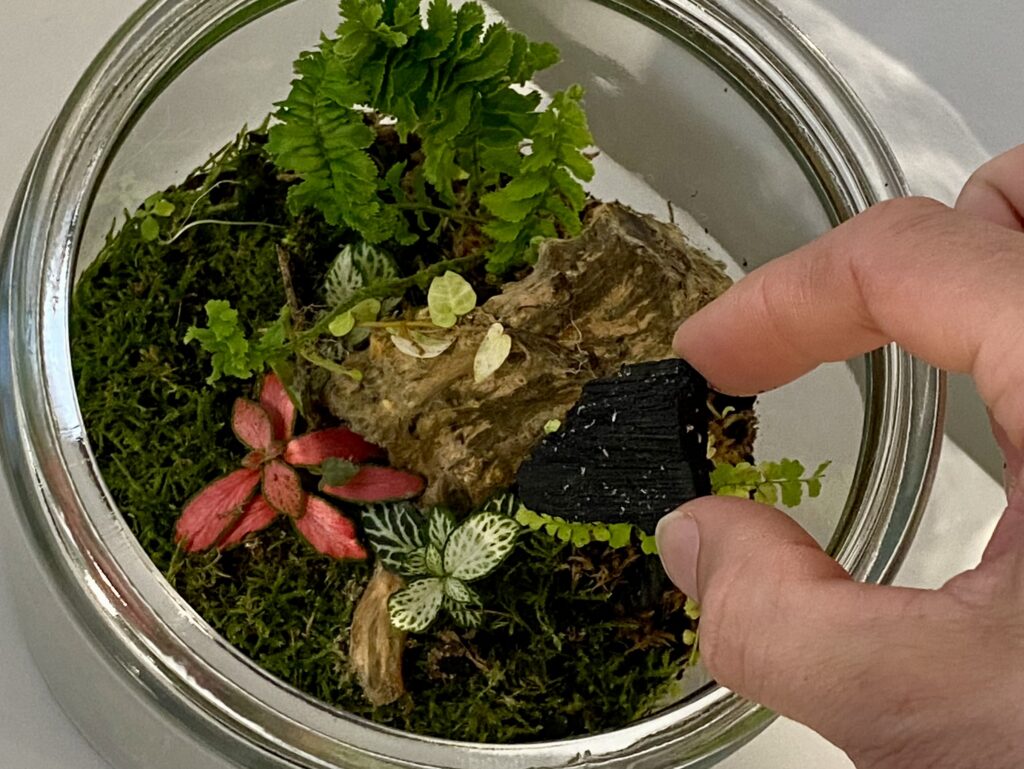
You can add springtails by gently tapping them in directly from their charcoal culture. They’ll begin feeding on mould and organic waste and help bring the ecosystem back into balance over time.
🔗 More care guides: Care Instructions
💡 Want to learn about springtails? Read Springtails: A Beginner’s Guide.
✉️ Need help? Contact Us and we’ll be happy to provide specific advice!